FUNERALS & MEMORIALS
A farewell that feels like them
Every life is different, Our goodbyes should be too.
When someone has spent their life being unmistakably themselves, reducing that life to a standard ceremony can feel completely wrong.
A funeral or memorial should give you space to grieve, remember, laugh, tell stories and recognise the person who has died in a way that feels honest.
Celebrating a life, not following a template
My role is to listen and learn about the person behind the dates and facts. Their passions, their habits, the stories everybody tells about them. The things that made people laugh and the things that mattered. From that, I will create a ceremony that feels recognisably theirs.
Funerals can be personal
There is no requirement for a farewell to be cold or impersonal.
It can be gentle and reflective. It can be spiritual. It can be full of colour. There can be laughter alongside tears.
For somebody who lived life outside the proverbial box, we can create a goodbye outside of it too.
Funeral ceremonies
I can work with you and your Funeral Director to create and conduct a funeral ceremony that honours the person who has died and supports those gathered to say goodbye.
We can include readings, music, tributes, ritual and personal contributions.
Memorials and celebrations of life
A memorial ceremony can give you greater freedom over when, where and how you gather.
It could be held in a garden, a favourite place, a woodland, a venue, or somewhere that holds particular meaning.
Without the same time pressures of a formal funeral, a memorial can offer more opportunities for family and friends to speak and share their own memories. I specifically offer both funeral and the more flexible memorial ceremonies.
Pagan and nature-rooted funerals
For people whose beliefs or spirituality connect to Paganism, nature and the cycle of the seasons, we can create a ceremony that honours that path.
I can incorporate ritual, elements, natural materials and meaningful symbolism where appropriate.
Nothing is added simply for effect.
It needs to mean something to the person and the people saying goodbye.
How it works
We’ll meet either face-to-face or online. You’ll tell me about the person who has died, and I’ll listen.
Based on our conversations and the information you give me, I’ll draft the ceremony and give you the opportunity to review and make changes.
On the day, I’ll deliver the ceremony with warmth, respect and care.
When you’re ready
You don’t need to know exactly what you want before contacting me.
We can begin with a conversation.
Talk to me about a funeral or memorial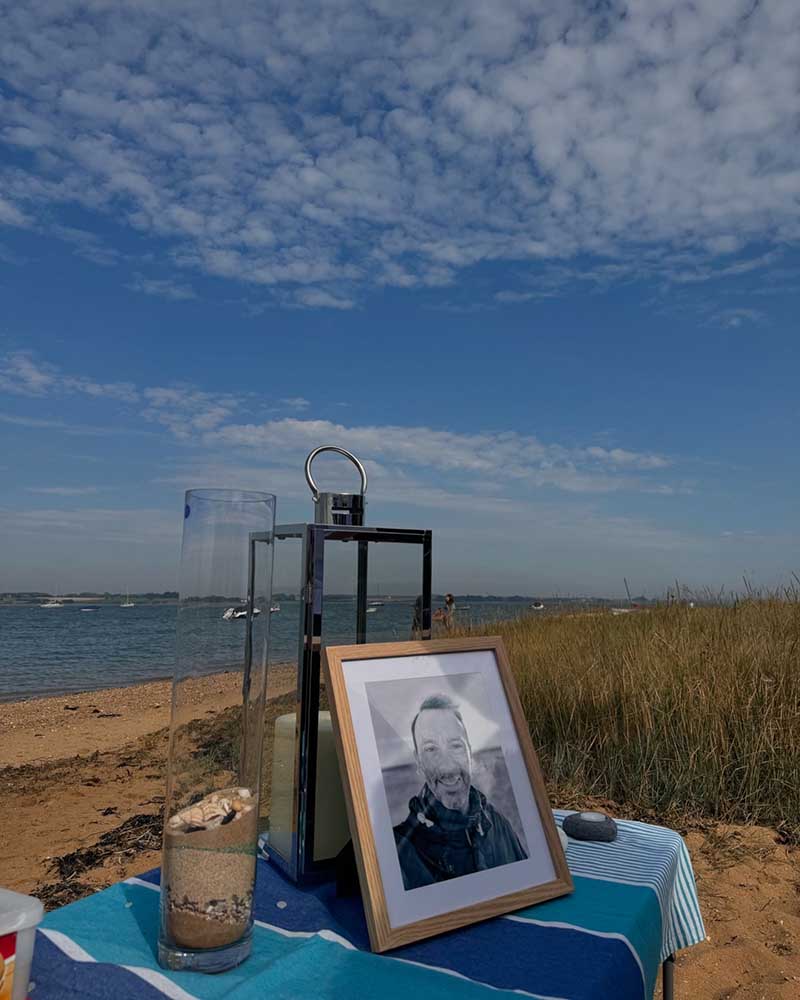
Frequently asked questions
What is the difference between a funeral and a memorial ceremony?
A funeral usually takes place relatively soon after someone has died and may be connected with their burial or cremation. A memorial or celebration of life can take place later and gives you more freedom over the date, location and structure of the gathering.
Both should do the same important thing: recognise the person and the life they lived.
Does a funeral ceremony have to be religious?
No. A ceremony can be religious, Pagan, spiritual, secular or a combination that genuinely reflects the person who has died. My role isn’t to impose beliefs on the ceremony but to understand what mattered to them and to the people saying goodbye.
Can you conduct a Pagan funeral or memorial?
Yes. As an eclectic Pagan myself, I’m comfortable working with Pagan beliefs, nature-based spirituality, seasonal symbolism, the elements and appropriate ritual.
That doesn’t mean pulling a standard ‘Pagan funeral’ off the shelf. We’ll create something that reflects the individual’s own path and beliefs.
Can family and friends speak during the ceremony?
Of course. People can give readings, share memories, deliver tributes or contribute in other ways. If somebody wants to take part but is nervous about speaking, we can also look at other ways of including their words.
Can a memorial ceremony be held outdoors?
Yes, providing you have permission to use the location and it is practical for the people attending. Gardens, woodlands and places with a strong connection to the person can make particularly meaningful settings.
What if we don’t know what we want the ceremony to include?
That’s completely normal. You don’t need to arrive with a finished plan.
I’ll listen to you talk about the person who has died, their life, personality, beliefs and the things that mattered to them. From those conversations, we’ll begin to understand what the ceremony needs to be.