Pagan ceremonies
Not every blog I write is going to be for everyone and that’s ok, in fact ,it’s more than ok.
One of the things I’ve learned in all my years of creating ceremonies is that the people who need to find me… will find me. So this one is deliberately, unapologetically aimed at my people… the pagans.
If you follow a pagan path, if the wheel of the year is how you navigate your life, if you feel the sabbats in your bones before the calendar tells you they’ve arrived… pull up a chair, let’s get comfy, cos this one is for you.
So What Do I Actually Mean by Pagan?
Paganism isn’t one thing. It never has been. At its broadest it’s an umbrella term for earth-based, nature-rooted spiritual paths that predate the major world religions and draw on the cycles of the natural world, the seasons, the elements, the old stories and the old ways.
Under that umbrella you’ll find Wicca, Druidry, Heathenry, folk traditions, animism ( the belief that all things have a spirit) and a hundred other paths besides. Some people follow one tradition closely. Some, like me, are eclectic, drawing from multiple streams and building a practice that is genuinely, personally theirs.
My own path sits most comfortably in Wicca, drawing a bit from Celtic traditions. The wheel of the year, the elements, the honouring of what was known and practiced long before it was written down. It’s not performative. It’s not aesthetic. It’s a lived, genuine relationship with the natural world and with ceremony as a sacred act. And it is absolutely the foundation of everything I create at Oak & Thorn Ceremonies.
The Wheel of the Year
For those newer to pagan practice, or those who’ve always felt drawn to the old ways and festivals without quite knowing the framework… here’s the shape of it.
The Wiccan wheel of the year turns through eight sabbats, four solar festivals and four fire festivals, marking the rhythm of the seasons and the movement of light through the year.
Samhain (31st October) sits at the end and beginning of the pagan year. The veil between worlds is thin. We honour our ancestors and our dead.
Yule (around 21st December), the winter solstice, is the longest night when we welcome the return of the light and according to some beliefs, the Oak King as well. Yule is a time for celebration but also stillness, reflection and quiet hope.
Imbolc (1st February) marks the very first stirrings of spring. Brigid’s festival. The spark before the flame.
Ostara (around 21st March), the spring equinox, is balance and new beginnings. The world waking up.
Beltane (1st May) is fire and fertility and the full joy of life returning. One of the great celebration festivals.
Litha (around 21st June), the summer solstice, is the peak of the sun’s power. Long light, warmth, abundance and the time the Holly king regains his power over the earth.
Lughnasadh (1st August) is the first harvest, a time of gratitude and the first acknowledgement that the light is beginning to turn.
Mabon (around 21st September), the autumn equinox, is the second harvest and a time of balance before the descent into darker months.
Each of these points in the year carries its own energy, its own symbolism, its own ceremonial weight. And each of them can be woven into ceremony in ways that are genuine, meaningful and rooted in actual tradition rather than surface decoration.
What This Means for Your Ceremony
Here’s where it gets practical.
A handfasting at Beltane carries a completely different energy to one at Samhain. Both are beautiful. Both are profound. But they are not the same ceremony, and if you’re living a pagan life you already know that. The season isn’t a backdrop. It’s part of what you’re creating.
When I write a ceremony for someone who walks a pagan path, I’m not reaching for a generic script and adding a few elemental references. I’m starting from the season you’re standing in, the cycle of the moon, the direction you’re facing, the tradition you follow, and the story that is specifically, entirely yours.
Handfastings are probably what most people associate with pagan ceremony, and yes, they are very much at the heart of what I do. The binding of hands, the acknowledgement of the elements, vows made to each other and to the earth… this is ancient, and it is still one of the most powerful ceremonial acts I know. Whether you want a full Beltane handfasting with fire and flowers and your whole community around you, or an intimate Samhain binding at dusk with just the two of you and the ancestors as witnesses… I can build that with you, from genuine understanding rather than Google.
But it goes beyond handfastings.
A naming ceremony for a child welcomed into the world at Imbolc, with Brigid invoked and the first breath of spring as part of the welcoming. A rite of passage ceremony at Mabon, marking a significant life transition as the year itself turns toward its quieter half. An acceptance of self ceremony held at Ostara, the equinox, that moment of perfect balance, where someone stands in the landscape they love and chooses, fully and publicly, to be who they actually are.
Milestone ceremonies marking the old life stages, Maiden to Mother, Mother to Crone, or however those archetypes sit within your own tradition and identity. Funerals and memorials that honour a pagan life properly, with the elements acknowledged, the season held, and the person’s path respected to the very last word.
And yes, if you want to mark the Sabbats themselves with ceremony… that’s a conversation I’m absolutely here for.
The Five Elements
Alongside the wheel of the year, elemental acknowledgement sits at the heart of much Wiccan practice. Earth, Air, Fire, Water and Spirit or Aether, the fifth element that holds the others.
In the ceremonies I create for pagan clients, the elements are never decorative. They’re structural. We open to the directions, we acknowledge what each element brings to the moment we’re creating. Earth for grounding and stability. Air for clarity and communication. Fire for transformation and passion. Water for emotion and intuition. Spirit for the sacred, the unseen, the connection to something larger than ourselves.
How explicitly this appears in your ceremony depends entirely on your path and your preference. I have brought together two pantheons on numerous occasions as well as blending belief and no belief into a ceremony that resonates for all parties.
For some it will be included a full elemental opening and closing. For others it’ll be woven through the language of the ceremony more subtly…present for those who know to look for it and just lyrical for those who don’t. Whichever way we go, it’ll be there because it means something, not because it looks good in the photos.
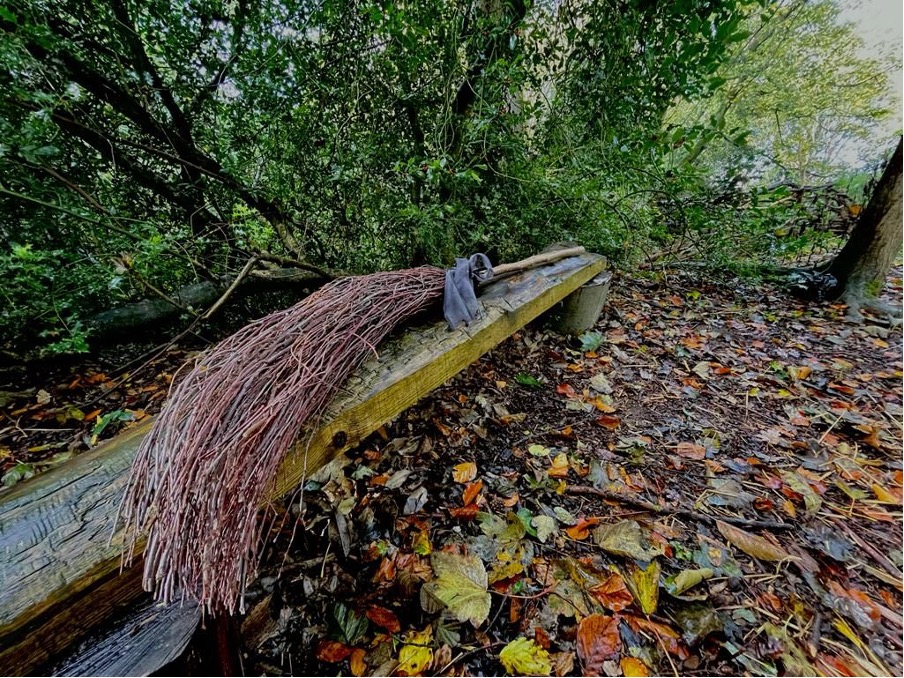
You Don’t Have to Explain Yourself to Me
This is possibly the most important thing I want to say.
I know what it’s like to try to explain a pagan ceremony to someone who doesn’t share the framework. The polite nodding. The slightly uncertain smile. The suggestions to maybe just… simplify it a bit, and all of the questions around ritual sacrifices!
That is not the experience you will have working with me.
You can arrive at our first conversation with your Book of Shadows, your tradition’s specific ritual requirements, your complicated relationship with one particular deity, your absolute conviction that the ceremony must face north and begin at sunrise or dusk. And I will take all of it seriously, ask the right questions, and build you something that honours it properly.
This is my path too. I’m not translating. I’m already here.
If you’re ready to talk about your ceremony, I’d love to hear what you’re dreaming of. All ceremonies are written from scratch, held outdoors wherever possible, and created in genuine collaboration with you from first conversation to final word.
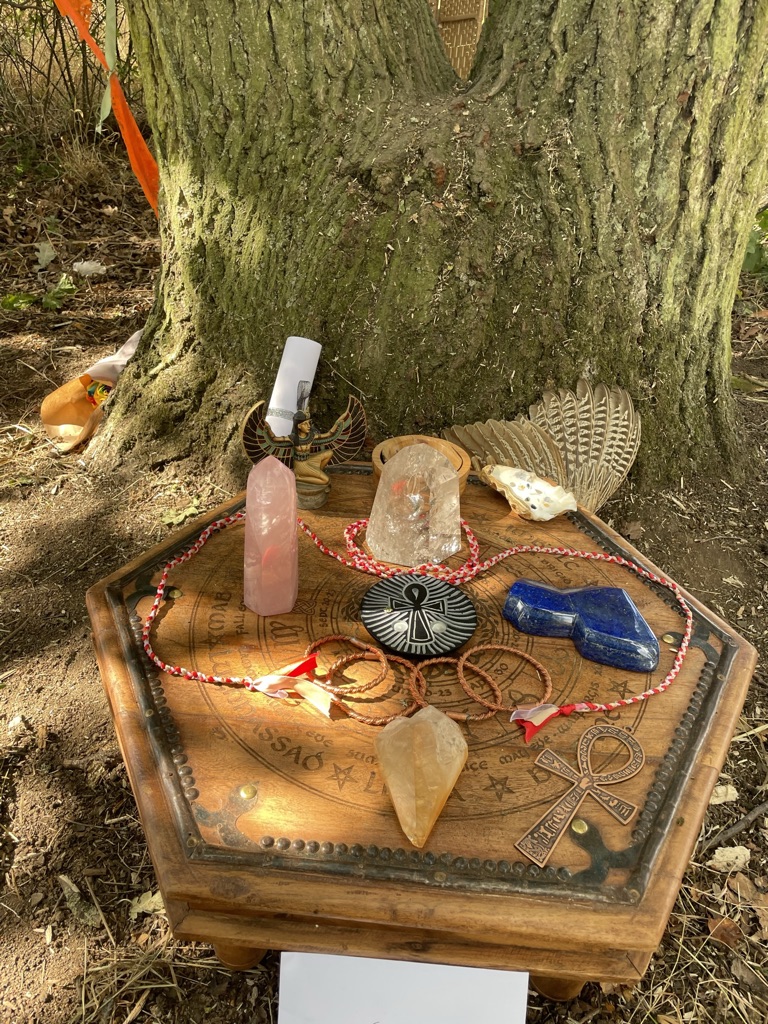
Michelle | Oak & Thorn Ceremonies
Inclusive, sustainable, and nature-centric ceremonies in Essex & Suffolk.