Closing of the Bones: An Ancient Ceremony for the Grief That Opens Us
There is a moment in every grief experience when we will voice some version of the same thing, “I feel like I have been torn open”.
We might be thinking about the death of our person, say it about the baby who never came or the friendship that ended without a goodbye.
Maybe we are thinking of the child we chose not to have, or about the parent we were estranged from when that phone call finally came.
The words are always roughly the same, because the body is always telling roughly the same truth. Grief opens us.
I have lost count of how many times I have heard it, and for a long time I did not know what to do with it. A funeral marks a death, and a good funeral does it well. But nothing in our culture marks the opening. Nothing arrives a month or a year later to ask after the person who was torn apart, to gather them, and to close them again with kindness. We send condolences and casseroles to the newly bereaved, and then, very politely we bow out and leave people to heal themselves.
This is the gap that the closing of the bones ceremony walks into, and it is why I have spent this time training as a Sacred Grief Ceremonialist with the Priestesses of the Goddess Temple in Glastonbury, and why grief ceremonies now sit alongside my weddings and funerals as their own body of work.
Where the ceremony comes from
The closing of the bones is an ancient Malay ceremony, held at the end of the forty days of rest that follow a birth. In the traditional practice, a new mother is massaged with warm oils and then bound snugly in lengths of cloth, from feet to shoulders, while the women around her hold the space. Each part of her body is closed in turn, with words spoken over it, and then she rests, deeply, before being slowly unwrapped and blessed for who she has become.
The belief beneath it is simple and profound. Birth is a great opening of the body, and something of the mother opens with it. The ceremony closes that opening again. It is not treatment and it is not recovery, exactly. It is recognition that a woman has been through something that remade her, that her body deserves deliberate, loving attention, and that the community around her has a job to do in putting her back together, because she should never have to do it alone.
The tradition has close cousins across Southeast Asia, in Javanese, Filipino and other birth practices, and it has travelled to the West largely through doulas trained by Malaysian teachers.
I honour those roots and I name them openly, because a ceremony this old deserves to be carried with the respect for where it comes from.
Grief does the opposite of birth, but it does the same thing to the body
Here is the turn that my training led me to, and the heart of the work I now offer. Birth opens a body, and the closing of the bones was made to close it. Grief does the opposite, loss tears a person open. The chest, the belly, the heart. And yet the shape of the need is the same. Something has been laid open that was never meant to stay open, and the person carrying it deserves the same deliberate, loving, communal closing that has been given to new mothers for generations.
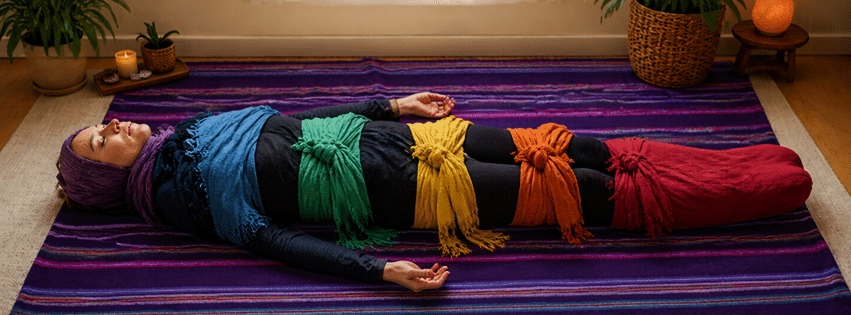
So in my training I have been shown how to take the bones of that old ceremony and turn it around with love. In my practice, the person lies down and is wrapped in five or seven scarves, from crown to feet, each closing accompanied by warmth, stillness and soft music, while I hold the space around them.
Then comes a slow unwrapping, and a blessing for the road home. Nothing is fixed and nothing is explained. The body is simply gathered, and held, and closed.
Not to shut the door on anyone’s grief. That is the misunderstanding I most want to clear away, because the name can sound like it means the opposite of what it does. Closing the bones does not close a grief. It closes a body that grief has opened, so that the person can walk forward whole, carrying what they carry, held.
Who it is for
In the traditional ceremony, the body being closed has done the opening. In mine, the opening has usually been done to the person, by loss in any of its forms.
GATHERING WHAT WAS LOST
I offer this work most fully in a private day I call Gathering What Was Lost, which is open to anyone carrying the loss of a child in any of the ways that can happen: the baby who died, the miscarriage, the pregnancy that ended, the child who never came though it was longed for, the child not chosen, and the grieving that follows any of these.
The day has two strands. The morning belongs to the little ones. Each person shapes a figure in clay, whatever form their loss asks for, and we carry the figures out onto the land together and leave them above ground for the earth to take back, offered rather than buried.
This part of the day is called Children of the Threshold, because it belongs to the souls who stood at the threshold of this world who could not stay, did not, or did not yet come through,
The afternoon is the Closing of the Bones, after a shared nutritious lunch, for the ones still standing.
The same wrapping also deepens two other ceremonies I offer.
Passing Over ceremonies
A stand-alone ceremony calling upon the four elements for the goodbyes that never got said.
Some grief stays unresolved, and not only for the people we loved. Sometimes it is the difficult relative, the friend things were left unsaid with, the person we were angry at, or barely knew, or never got to meet at all. The old world understood this kind of grief as its own thing, the Greeks kept rites for the unquiet dead, those who had crossed over unrested or unmourned, and for centuries in these islands a month’s mind, a service held a month after a death, existed precisely to finish what the funeral could not.
The wisdom underneath them all is the same. When the goodbye never happened, the grieving soul has nowhere to put it. So we build the goodbye.
This ceremony works with the four elements, in order… earth, water, fire, and air.
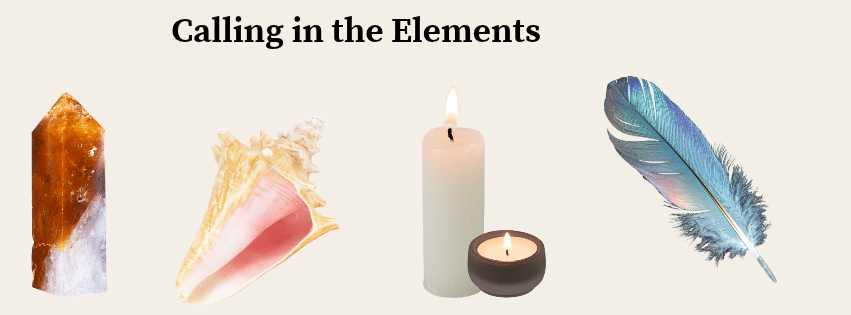
We begin with earth, grounding, sitting on the land, feeling what is solid.
Then water, fluid and ever moving, the element of feeling.
We follow with fire, the heat, the passion and the memories.
And we finish with air, the element of breath and spirit.
We end with a guided meditation in which you meet the person one last time, say the goodbye, and let them go.
Letting Go Ceremonies
For when we grieve the living, because not all grief is for the dead. Some of the heaviest grief we carry is for those still alive. The ex-partner we once loved, the family member we are estranged from, the parent fading with dementia, or the friend the road divided us from.
And this grief has no ceremony anywhere in our world. There is no funeral for someone who is still alive, no grave to visit, no card of condolence that says the right thing, and so the loss goes unmourned, and the unmourned keeps its grip.
The old cultures knew that ties are real things, in the Norse tellings, the Norns spin the threads that bind each life to another, and in the old Scottish custom of handfasting, a marriage was tied for a year and a day and then, if the couple chose, untied, and the untying was its own rite, as deliberate as the tying.
We still tie ourselves to each other. What we have lost is the craft of untying.
This ceremony is that untying, and it takes its strands from the passing over rite, the four elements, earth, water, fire and air, in their proper order.
Followed once again by the guided meditation in which the cords that bind you are seen, and then cut.
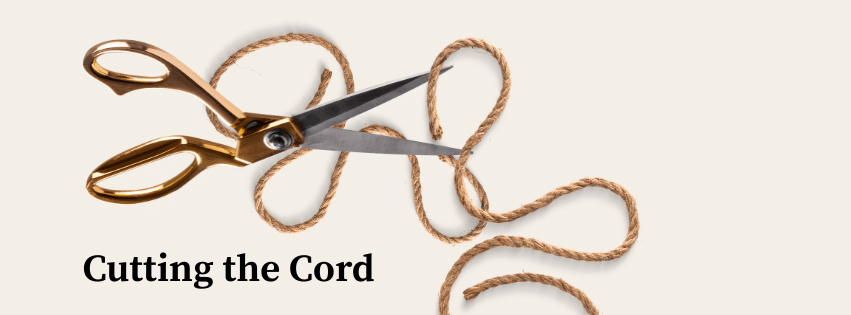
The ties of anger, of longing, of unfinished business, of the person you thought they would become.
Cutting a cord does not mean hating, and it does not always mean never speaking again. It means that what flows between you from now on is chosen, not compelled.
Because grief for the living lives in the body too, this ceremony can be deepened with a closing of the bones, using the same wrapping I use in the private day above, the change the meditation begins, the body gets to finish.
If you are reading this and living with your own grief…
If something in this post has landed for you, it is worth noticing. You do not have to be ready, and you do not have to book anything. Every ceremony I offer begins with a full consultation, at least a week before the day, in which nothing is decided and nothing is booked, we simply talk about what you are carrying and whether this is the right time. Sometimes the honest answer is “not yet”, and I will always say so.
The full details of all the grief ceremonies, including the private day of Children of the Threshold and the closing of the bones will soon be on my Sacred Grief Ceremonies page.
You are welcome to ask questions. I would rather answer a hundred questions than have someone arrive unready.
Michelle, Oak & Thorn celebrant for weddings, funerals and everything in between that needs marking with love| A Sacred Grief Ceremonialist trained by the Goddess Temple in Glastonbury | Essex based, travelling throughout the UK | Earth, planet and people friendly | You do not need to be pagan to be held here|
Michelle | Oak & Thorn Ceremonies Pagan Celebrant
Inclusive, sustainable, and nature-centric ceremonies in Essex & Suffolk.